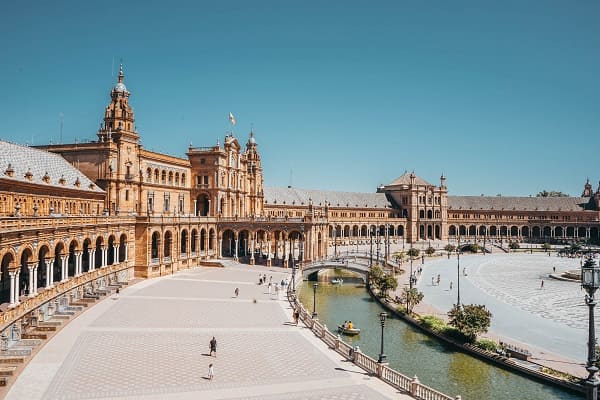

The Santa Cruz district of Seville is the historic heart of the city. Cobbled streets that smell of orange blossom, courtyards hidden behind wrought iron railings and squares where time seems to stand still. For centuries this was the most important Jewish quarter in southern Spain, and today its corners hold stories that few people know.
This guide is written from inside the neighbourhood. It is not just another tourist list: we tell you what only those who walk these streets every day know. From the must-see monuments to the secrets that don't appear in the guidebooks.

What is the Santa Cruz neighbourhood and why is it so special?
The Santa Cruz district occupies the southeast quadrant of the old quarter of Seville. Its natural boundaries are the Jardines de Murillo Gardens to the east, the Real Alcázar to the south, Calle Mateos Gago to the north and Calle Santa María la Blanca to the east. Together with the neighbouring district of San Bartolomé, it forms what was historically known as the Jewish quarter of Seville.
What makes this neighbourhood unique is its layout. The streets are narrow, winding and seemingly chaotic. It was no coincidence: this labyrinth protected its inhabitants from the extreme heat of the Sevillian summer and, in times of conflict, made invasions more difficult.
Today, wandering around Santa Cruz is still the best way to discover it. Every corner reveals a flowery courtyard, a hidden fountain or a façade with centuries of history. The scent of jasmine and orange blossom accompanies you in spring, while summer nights bring the distant sound of a flamenco guitar.
History of the Santa Cruz quarter: from medieval Jewish quarter to the heart of Seville

Origins: the second largest Jewish quarter in Spain (12th century)
When Ferdinand III conquered Seville in 1248, he concentrated the Jewish population in this area. The community grew rapidly and became the second largest in the Iberian Peninsula, second only to Toledo. The Jews of Seville prospered as merchants, doctors, craftsmen and moneylenders.
King Alfonso X the Wise allowed the community to maintain three synagogues: the present-day churches of Santa Cruz, Santa María la Blanca and San Bartolomé. These buildings retain Mudejar architectural elements that reveal their origin, such as the horseshoe arches and geometric plasterwork.
The assault of 1391 and the expulsion of 1492
The coexistence ended tragically on 6 June 1391. A mob incited by the archdeacon of Ecija stormed the Jewish quarter. According to the chronicles, nearly 4,000 people died in a few hours. Many survivors converted to Christianity to save their lives; they were the so-called conversos or marranos.
A century later, in 1492, the Catholic Monarchs signed the Alhambra Decree. The remaining Jews had to convert or leave Spain. The Jewish quarter was emptied. The synagogues became churches and the houses were occupied by Christian families.
The renaissance of the neighbourhood: from decadence to the 1929 Expo
During the 17th and 18th centuries, the neighbourhood went into decline. The plague and wars left many houses abandoned. Noble families moved to other areas of the city.
The turning point came with the Ibero-American Exhibition of 1929. The City Council decided to renovate Santa Cruz to show the world the essence of Seville. Squares were restored, orange trees were planted and the lost charm was recovered. It was then that the only wide street in the neighbourhood was born: Mateos Gago, designed to facilitate access for visitors.
What to see in the Santa Cruz neighbourhood
Seville Cathedral and the Giralda

Seville Cathedral is the largest Gothic temple in the world. It was built on the site of the old Almohad mosque, and the minaret, the Giralda, has been preserved. This 104-metre high bell tower dominates the city skyline and offers the best views of Seville from its top.
Inside the Cathedral lie the remains of Christopher Columbus, in an impressive mausoleum supported by four figures representing the kingdoms of Castile, Leon, Aragon and Navarre. It also houses works by Murillo, Zurbarán and Goya.
The Royal Alcazar
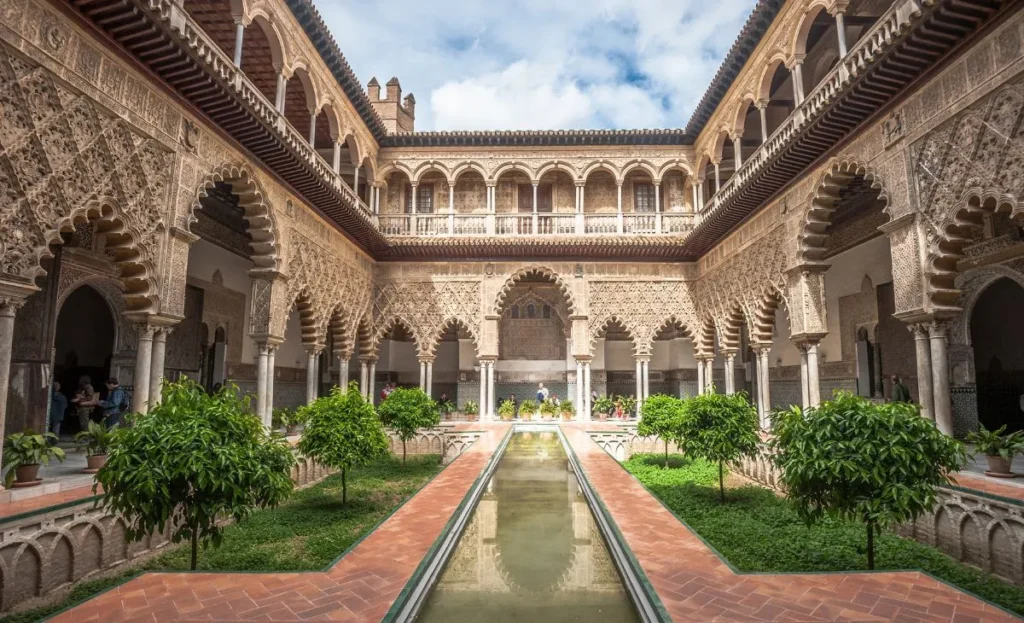
The Real Alcázar is the oldest royal palace in use in Europe. The kings of Spain still use it when they visit Seville. Its construction began in the 10th century as a Muslim fortress, and each period left its mark: Almohad, Mudejar, Gothic and Renaissance elements coexist in harmony.
The Alcazar Gardens are an oasis of fountains, ponds and centuries-old orange trees. If they look familiar, you might recognise them from Game of Thrones: scenes from the Water Gardens of Dorne were filmed here.
The Archive of the Indies
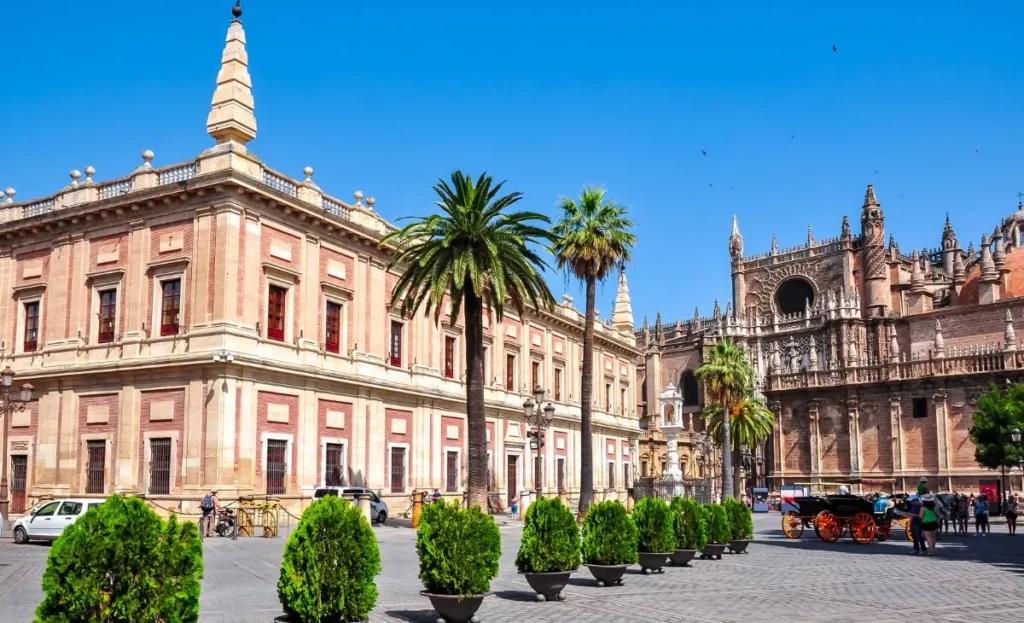
The Archive of the Indies holds 43,000 files containing the history of three centuries of relations between Spain and America. Original maps of the conquest, letters from Columbus, records of Hernán Cortés... It's all here. The building, designed by Juan de Herrera (the architect of El Escorial), is a World Heritage Site along with the Cathedral and the Alcázar.
Churches and ancient synagogues

The church of Santa María la Blanca preserves the structure of the synagogue it was until 1391. Its Mudejar columns and arches reveal the building's Jewish past. It is worth going inside to see Murillo's paintings and to feel the atmosphere of the place.
The church of San Bartolomé, in the neighbouring district of the same name, was another synagogue. Its slender tower is one of the landmarks of the old Jewish quarter. Today it is home to the Brotherhood of Cristo de la Salud.
The most beautiful squares

The Plaza de Santa Cruz occupies the site of the church that gave its name to the neighbourhood, demolished by the French in 1810. In its centre stands the Cruz de la Cerrajería, a masterpiece of wrought iron from the 17th century. Murillo was buried here before his remains were lost.

The Plaza de Doña Elvira is a haven of peace with tiled benches and orange trees. In the 17th century it housed a corral de comedias where plays by Lope de Vega were performed.
The Plaza de los Venerables owes its name to the Hospital de los Venerables Sacerdotes, now a museum. Its Baroque church houses frescoes by Valdés Leal and Lucas Valor.

The Patio de Banderas, next to the Alcázar, offers the most photographed postcard of Seville: the Giralda framed by orange trees. Few people know that under its cobblestones lie the remains of Roman and Islamic Seville.
Secret corners that only locals know about
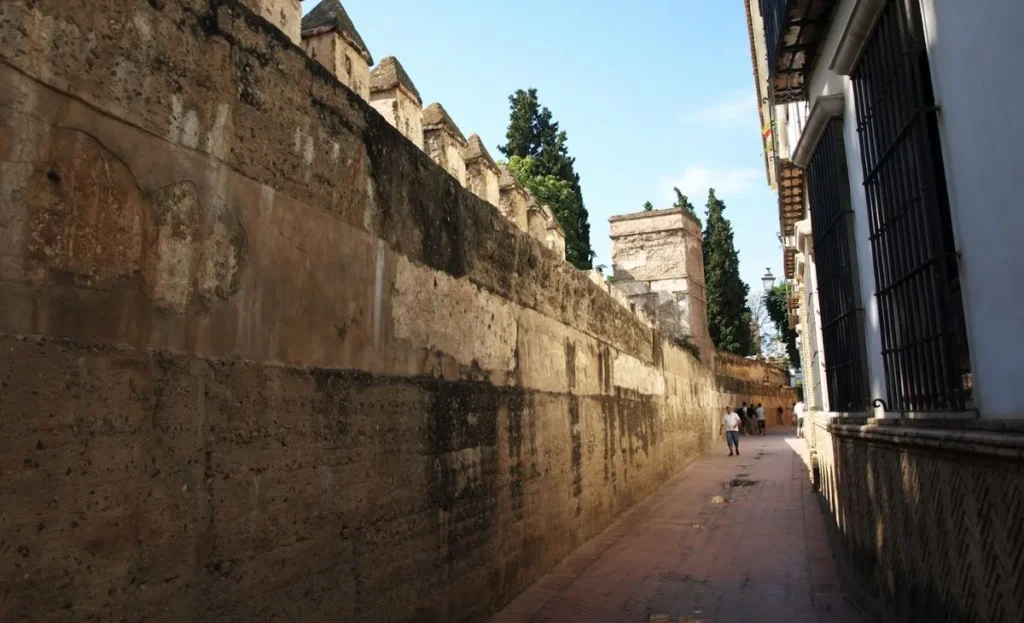
The Callejón del Agua runs parallel to the walls of the Alcázar. Its name recalls the irrigation channel that carried water to the royal gardens. At the end of the alley is the Plaza de Alfaro, where, according to tradition, the balcony scene from Romeo and Juliet was inspired.
The Plaza de las Cruces hides the Crucero de San Lázaro, a 16th century stone cross surrounded by four orange trees. It is one of the quietest corners of the neighbourhood.

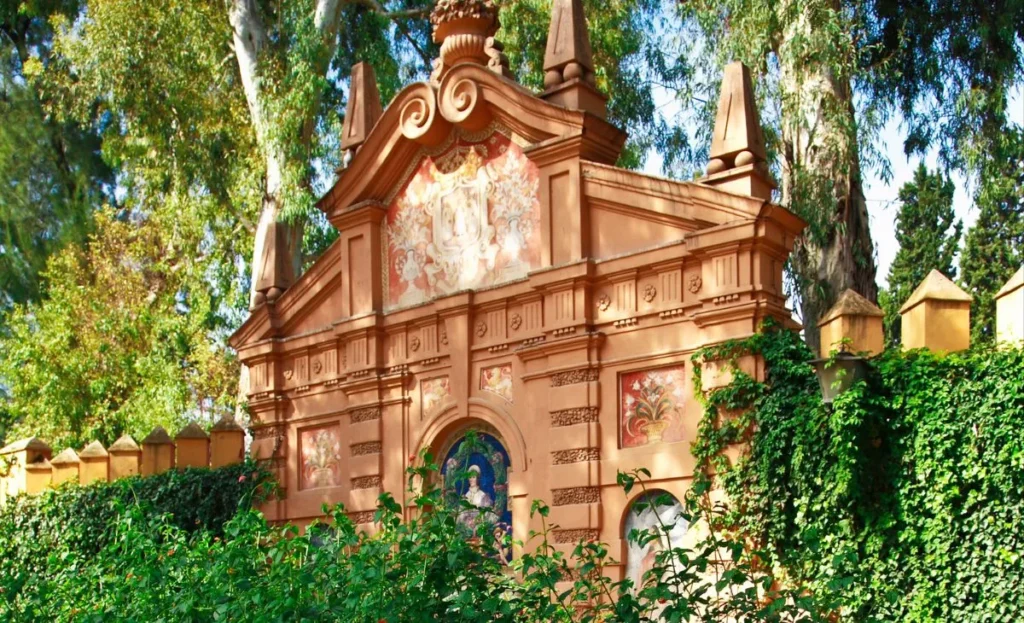
The Murillo Gardens border the neighbourhood to the east. Its enormous hundred-year-old ficus trees provide shade in summer and its ceramic benches invite you to rest with views of the Alcázar.
Walking route through the Santa Cruz neighbourhood (1 hour)
This tour takes you through the essentials of the neighbourhood in about an hour, not counting visits inside the monuments.
1. Starts in the Patio de Banderas → Enter from the Plaza del Triunfo and enjoy the view of the Giralda among the orange trees.
2. Cross Judería Street → go through the passageway under the walls of the Alcazar. Look at the tiles and the grilles.
3. Plaza de las Banderas → Plaza de la Alianza → walk through the narrow streets. Look for the millstones on the corners.
4. Susona Street → finds the skull tile and recalls the legend of the young girl who betrayed her father.
5. Doña Elvira Square → Sit on one of the tiled benches under the orange trees.
6. Santa Cruz Square → admire the Cruz de la Cerrajería and the place where Murillo was buried.
7. Water Alley → walk along this passage next to the walls of the Alcázar until you reach the Plaza de Alfaro.
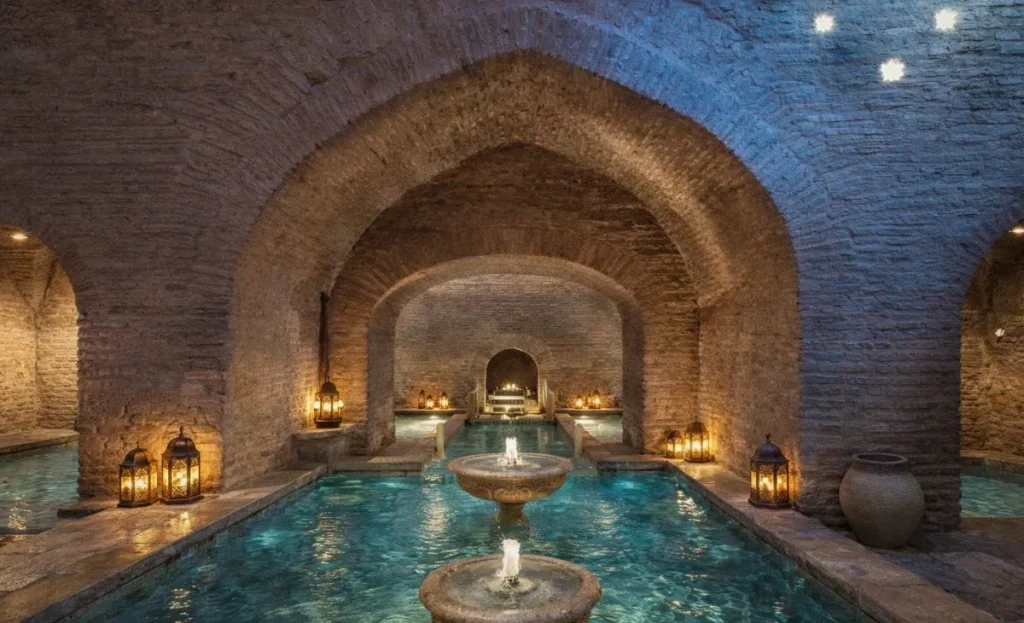
8. Ends at Mesón del Moro street. → Here you will find the best-preserved 12th-century Arab baths in the district, now integrated into a historic restaurant.
Curiosities and legends of the neighbourhood
Don Juan Tenorio and the balcony of Romeo and Juliet
The legend of Don Juan Tenorio was born in these streets. The most famous seducer in Spanish literature lived, according to Tirso de Molina, in the Santa Cruz neighbourhood. In the Plaza de los Refinadores there is a statue that commemorates him.
The Plaza de Alfaro, at the end of the Callejón del Agua, has a balcony that inspired the romantic travellers of the 19th century. Some claim that Shakespeare based his most famous scene in Romeo and Juliet on this corner. Although it is unlikely that he visited Seville, the legend lives on.
Susona Street and the skull of betrayal

Susanna Ben Shushon was a young Jewish convert of extraordinary beauty. She fell in love with a Christian knight and, to protect him, betrayed her own father's conspiracy against the Inquisition. Her father and the conspirators were executed.
Consumed by guilt, Susana asked that when she died her skull be hung on the door of her house as a warning. For centuries, a skull presided over the entrance to the house. Today, a tile with a skull commemorates the story in the street that bears her name: Calle Susona.
The millstones on the facades

Walking around the neighbourhood you will see stone circles embedded in the corners of many buildings. These are recycled mill wheels that 16th-century builders put in place to protect the façades from the rubbing of carriages. A practical solution that today forms part of the visual charm of the neighbourhood.
The narrowest street in Seville

Calle Reinoso, near the Plaza de Doña Elvira, is barely more than 90 centimetres wide at its narrowest point. Two people cannot pass each other without brushing against each other. Some say it is the narrowest street in Spain.
Illustrious personalities of the Santa Cruz neighbourhood
Murillo: the painter who was born and died here
Bartolomé Esteban Murillo was born in 1617 in the Plaza de Santa Cruz. He was the youngest of fourteen children and was orphaned at the age of ten. Despite the blows of life, he became one of the most important painters of the Spanish Golden Age.
He lived almost all his life in the neighbourhood and painted many of his most famous works here: the Immaculadas which today hang in museums all over the world, the street children he portrayed with tenderness, the religious scenes that convents and churches commissioned from him. His house in Santa Teresa Street is now a small museum.
Murillo died in 1682 after falling from a scaffold while painting in Cadiz. He was buried in the church of Santa Cruz, but when the French demolished it in 1810, his remains were lost forever. The neighbourhood never forgot its painter: the Jardines de Murillo are named after him, and his spirit is still present in every corner.
Luis Cernuda and his 10 years in Aire Street
The poet Luis Cernuda, one of the greats of the Generation of '27, was born in Seville in 1902 and lived for a decade in Calle Aire. This street, one of the narrowest in the neighbourhood, inspired some of his most melancholic verses about loneliness and desire.
Cernuda had a complicated relationship with his hometown. He loved and hated it in equal parts. After the Civil War he went into exile and never returned. He died in Mexico in 1963, longing for a Seville that only existed in his memory. A tile on the façade of his house commemorates his time in these streets.
Washington Irving before the Tales of the Alhambra
The American writer Washington Irving arrived in Seville in 1828 to research in the Archivo de Indias. He was looking for documents about Christopher Columbus for a biography he had been commissioned to write. He stayed near the Santa Cruz quarter and was fascinated by the atmosphere of the Jewish quarter.
Seville changed his life. Here he discovered the charm of Andalusia, its legends, its light, its people. When he finished his work, instead of returning home, he travelled to Granada. There he would write the Tales of the Alhambra, the book that spread the romantic image of Spain throughout the world. It all began in the streets of Santa Cruz.
The Arab baths in the neighbourhood: vestiges of the 12th century

Seville preserves few remains of its original Arab baths. Most of them were destroyed or transformed after the Reconquest. However, some of the best preserved in the city still survive in the Santa Cruz neighbourhood. If you would like to learn more about their history, we recommend our article on the Arab baths of Seville.
These hammams had a religious function: Muslims had to purify themselves before attending prayer in the mosque, now the cathedral. The rooms followed an increasing temperature sequence - cold, warm and hot room - and the vaults were pierced with star-shaped skylights called madawis.
After the Christian conquest, many baths were converted. The Catholic Monarchs transformed some of them into inns to accommodate Moorish and Mudejar traders arriving from other territories. Hence the name of Calle Mesón del Moro, where the original 12th-century arches and vaults can still be seen integrated into later buildings.
Where to eat in the Santa Cruz neighbourhood
The neighbourhood offers something for everyone, from traditional taverns to starred restaurants. Calle Mateos Gago is home to many tapas bars, although prices reflect its touristy location.
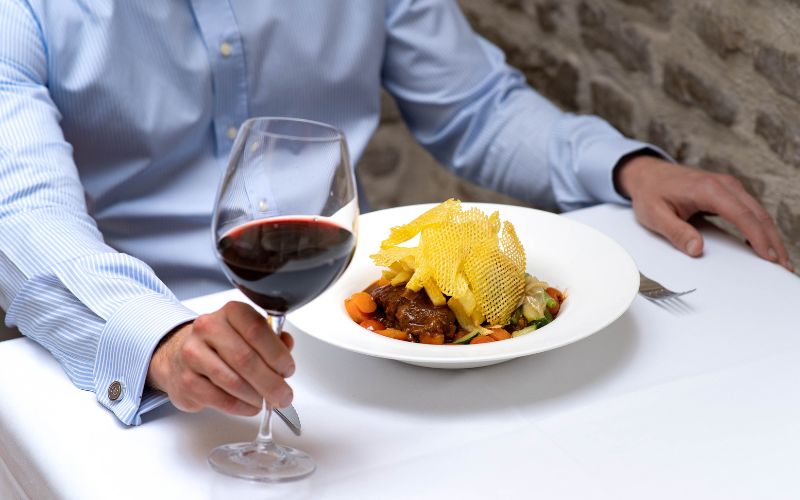
For a different experience, the Mesón del Moro street hides one of the best kept secrets of the neighbourhood: the restaurant San Marco Santa Cruz. It occupies authentic 12th century Arab baths with brick vaults, Mudejar arches and the original stars on the ceiling. Ferran Adrià worked here before revolutionising world gastronomy at El Bulli. Today they serve Italian and Mediterranean cuisine in a space that combines eight centuries of history with one of the best menus and tasting menus in the city.
The bars in the Plaza de los Venerables are perfect for a drink with a view. And if you're looking for romantic places in Seville For dining as a couple, the Santa Cruz neighbourhood has several options with interior patios and candlelight.
Practical tips for visiting the neighbourhood
How to get there
The Santa Cruz neighbourhood is mostly pedestrianised. The nearest tram stop is Archivo de Indias, next to the Cathedral. By bus, lines C5, 5 and 41 leave you nearby. If you come by car, park in the Cano y Cueto car park or under the Plaza de la Contratación.
Best time to visit
Early in the morning you'll have the streets almost to yourself. The neighbourhood awakens slowly and the light is perfect for photography. At sunset, when the sun tints the facades orange, the atmosphere is magical. Avoid the middle of the day in summer: the heat between the walls can be suffocating.
What to avoid
Don't trust menus with photos on the door - they're often tourist traps. Beware of pickpockets in the busiest areas, especially near the Cathedral. And don't try to cover everything in an hour: the neighbourhood is best enjoyed unhurriedly, getting lost in its streets.
Frequently asked questions about the Santa Cruz neighbourhood
How much time do I need to visit the Santa Cruz neighbourhood? A leisurely stroll takes about 2-3 hours. If you want to enter the Cathedral, the Alcázar and the Archivo de Indias, you will need a full day.
Is the neighbourhood safe at night? Yes, the neighbourhood is busy until late in the evening and is well lit. As in any tourist area, take the usual precautions.
Can I visit the neighbourhood in a wheelchair? It is complicated. Many streets have uneven cobblestones and steps. Calle Mateos Gago and the main squares are more accessible.
Where can I learn more about the Jewish history of the neighbourhood? The Casa de la Memoria, on Calle Ximénez de Enciso, is the interpretation centre of the Jewish quarter of Seville. It offers exhibitions and flamenco shows.
What is the difference between the Santa Cruz and San Bartolomé neighbourhoods? Both used to form the old Jewish quarter. Santa Cruz is more touristy and well-known; San Bartolomé retains a more local and authentic atmosphere. Together they offer a complete overview of the old Jewish quarter.
If you finish your stroll through the neighbourhood in the evening, you will find some of Seville's most special restaurants in these streets. Calle Mesón del Moro, in particular, holds surprises worth discovering.
Article written from the heart of the Santa Cruz neighbourhood, where we have been opening our doors every day for more than three decades.